
Good customer service is critical to improving your company’s bottom line. In fact, 86% of customers say they’re willing to pay more for better customer experiences.
If your company fails to deliver, not only could it hurt your customer retention rate, but it could also affect your ability to attract new customers. That’s because 13% of customers tell 15 or more people about a bad experience with a brand.
Tech support can no longer be on the back burner for telecom and broadband businesses looking to get ahead in the new year. That’s why it’s essential to have strong, all-in-one customer service platforms for support teams. So, how do you identify the customer support solutions that are truly comprehensive? Below, we go over a few key features to look for.
Key components of strong, all-in-one customer service platforms for support teams
There are tons of customer service platforms that claim to be an “all-in-one” support tool. How do you differentiate the ones that actually deliver from those that are just hype? Below, we outline a few critical components of a strong tech support solution.
Creates unified customer experiences through omnichannel support
Most customer service interactions aren’t happening within a single channel or touchpoint. A customer looking for help connecting their router to Wi-Fi may first open your app. They might then seek support via a customer service chatbot before finally calling in to your contact center.
However, many customers may find that the information and quality of support they receive vary across channels. This means customers have inconsistent answers across channels. Also, because agents lack context from the customer’s previous interactions, the customer ends up repeating themselves frequently, which increases frustration.
Companies looking to create a better end-to-end customer experience in telecom should ensure their customer support platform creates a consistent experience across channels. To do this, they should leverage omnichannel customer service. Omnichannel tech support retains the context of answers across channels in a single, unified platform.
For example, if that customer with the router issue calls your contact center, the agent can send a tutorial via email or SMS. The agent also has context from the customer’s previous touchpoints and interactions, helping them to deliver faster issue resolution and streamline the customer experience.
Leverages customer self-service tools
88% of customers expect you to provide self-service options. That means that customer self-service is vital to improving customer experiences.
Yet too many companies aren’t delivering the automated support experience customers demand. Over half of customers say businesses provide too little information for them to resolve issues independently. The silver lining is that if you can create a streamlined self-service experience for your customers, you can easily differentiate your brand from the competition.
However, good customer self-service is more than putting up a plethora of FAQ pages. Telecom companies looking to provide the best customer self-service should consider leveraging tools such as interactive tutorials or other formats optimized for learning.
Interactive self-serve tutorials give customers 24/7 access to tech support. It also allows them to skip lengthy call center queues and have instant customer service at their fingertips. As customers successfully troubleshoot with self-service tools, digital adoption rates increase. This boost in digital adoption, in turn, can help reduce contact center call volume and decrease business expenses.
AI-powered support and guidance that enhances accuracy and speed
If your company isn’t investing in AI, you’re already behind. 80% of customer care leaders say they’re investing in generative AI. AI technology, such as large language models (LLMs), is drastically reshaping customer service. LLMs often power conversational AI chatbots, which can provide more accurate and tailored customer service than previous generations of virtual assistants.
This is because, unlike previous generations of chatbots that relied on pre-scripted keywords, LLMs use natural language processing to understand customer requests better. This enables these AI chatbots to deliver quality customer service and resolve support tickets more quickly. As a result, one of the key benefits of chatbots is that they can help your contact center scale support without hiring more staff.
However, this doesn’t mean that you no longer need contact center agents. Despite its many capabilities, AI won’t replace humans. People still overwhelmingly prefer talking to a real person for customer service issues. In fact, according to the National Customer Rage survey, the number one frustration among customers is the inability to speak to a human.
Instead, successful telecom and broadband companies will leverage a combination of human agents and AI technology. For example, you could use AI to improve call center agent productivity or streamline the agent onboarding process. Companies that seek to get ahead will leverage the strengths of both humans and AI to create a powerful customer service strategy.
Includes video chat customer support tools
There’s no doubt that live video is the future of customer service. There are many benefits to using video chat customer service. The biggest advantage is faster and more streamlined issue resolution for customers.
Live video facilitates better communication between customers and agents, as agents can see the customer’s issue in real time, enabling more accurate diagnosis and troubleshooting. As a result, average handle time improves along with first-call resolution. This, in turn, reduces business expenses for your call center and can improve your company’s bottom line.
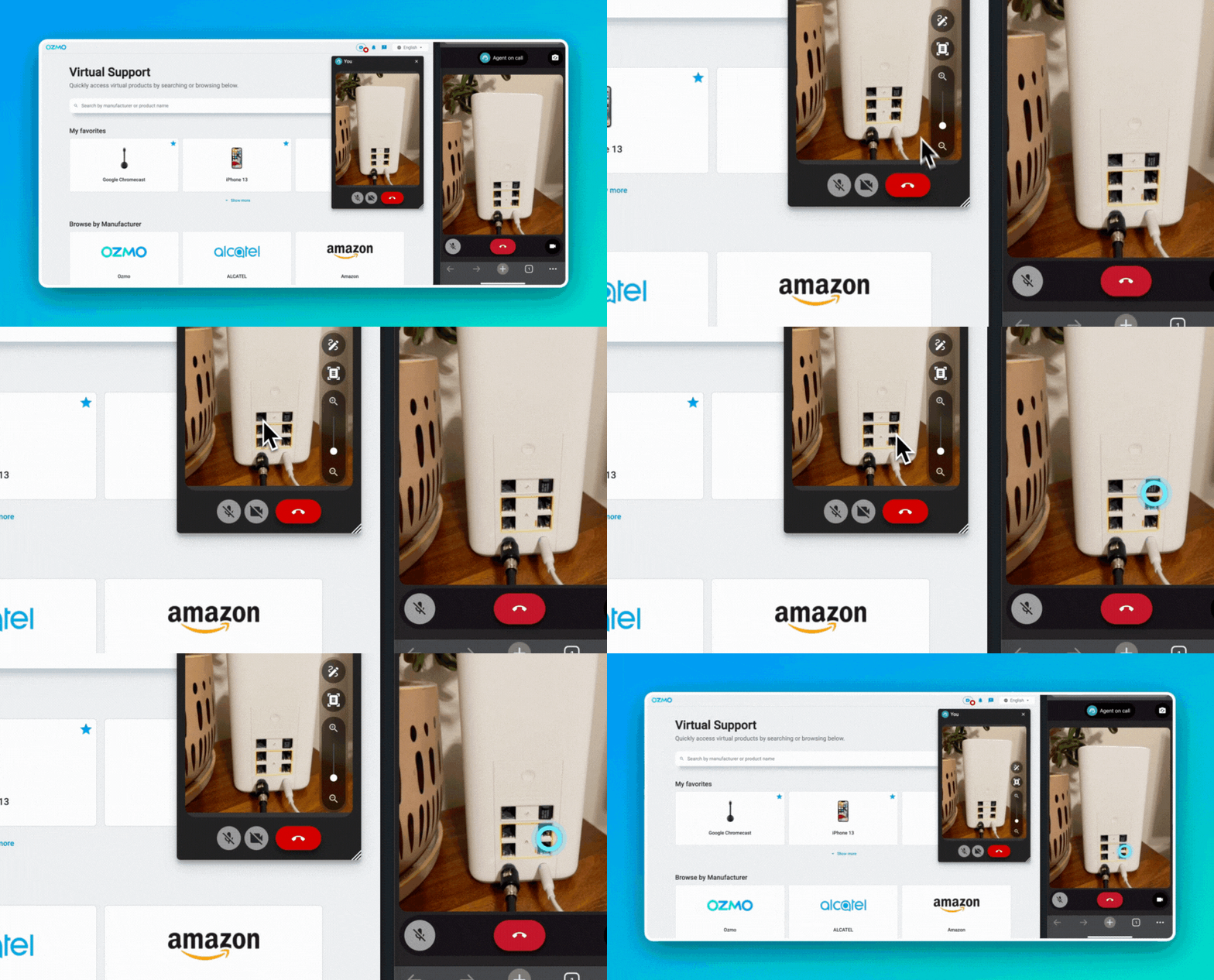
There are many use cases for video chat customer support in your call center. For example, you could leverage visual customer support to reduce the need for expensive truck rolls and repeat visits. Or, you could streamline the self-installation and onboarding experience for customers. You can minimize customer frustration and churn risk by providing step-by-step guidance when they get stuck. Live video support can help your brand give the proactive customer service experience you need to stand out from competitors and get ahead in the new year.
Has a strong self-service knowledge base
Customers want fast and reliable tech support solutions at their fingertips. Rather than wait in a call center queue, most customers try to resolve issues on their own. Yet many businesses fail to provide adequate self-service options to empower customer success. Over half of customers say brands don’t give enough information to help them resolve issues on their own.
This is why choosing a comprehensive customer support solution with a strong self-service knowledge base is so important. Otherwise, your company could see higher customer churn rates due to poor customer service.
However, it’s important to note that a strong self-service knowledge base doesn’t rely on text-based manuals or FAQ pages. It includes interactive and video tutorials to guide customers through troubleshooting. It should also allow you to provide much-needed customer support during network disruptions.
Self-service knowledge bases should also include multilingual support options. Tech glitches are inconvenient enough without trying to troubleshoot them in another language. That’s why it’s essential to ensure your self-service offerings include multilingual options.
For example, if you do business in Canada, one in five Canadians say French is their preferred language. If your self-service tutorials are only in English, this could create unnecessary frustration for your French-speaking customers. Multilingual self-service tools help ensure that all customers can have a streamlined experience, regardless of their preferred language.
Tech support teams need customer support solutions that grow with them
CX is now the new battleground for brand differentiation, meaning that customer support teams are now mission-critical to your company’s success. To help your agents deliver the high-quality experience your customers expect, you need a truly comprehensive customer support platform that ensures a positive end-to-end experience.
To ensure your team meets the moment, look for a platform that offers live video support to create a more tailored support experience and enable faster issue resolution. You’ll also want to choose a platform that leverages AI to help your team scale support effectively. Of course, no tech support platform would be truly comprehensive without customer self-service and a strong knowledge base to drive digital adoption.
By looking for customer support solutions with the capabilities outlined in this blog post, you can help your brand differentiate itself in an increasingly saturated telecom market.