The world of banking and finance is increasingly digital. 83% of Americans use finance apps for mobile banking, payments and other financial services. That means providing a good mobile app experience is becoming critical to winning loyal customers and reducing the risk of customer churn.
If customers struggle with mobile banking issues, not only does it create friction in the customer experience, but customers may decide to go elsewhere altogether. Research shows one in four customers is willing to switch banks.
Getting ahead of mobile banking issues can potentially help your institution in two ways:
- It can help reduce the risk of customer attrition.
- It can potentially position you to acquire new customers who are looking to switch financial services providers.
So, how can you effectively handle banking app troubleshooting? Below, we go over why addressing finance app support issues matters, some of the most common mobile banking issues and steps you can take to mitigate them.
Why does addressing finance app support issues matter?
96% of customers leave after a single bad service experience. That means if your mobile banking app struggles with persistent finance app support issues, customers are likely to go elsewhere.
High customer churn rates can have a devastating impact on your company’s reputation as well as your budget. It’s estimated that poor customer service costs businesses $1.6 trillion per year. Additionally, research shows it can cost up to seven times more to acquire new customers versus retaining your current customer base.
Mobile banking issues can also damage the trust you have with your customers. That’s because money is deeply emotional for customers. When they open an account with your institution, they’re trusting you with their:
- Savings
- Pension
- Emergency fund
- Child’s college tuition
And so much more. If your company struggles to deliver a positive in-app experience, it can hurt your relationship with your customers. Over half of customers say trust is a critical factor for choosing a financial institution. Consistently providing reliable support can potentially help strengthen the relationship between customers and your brand.
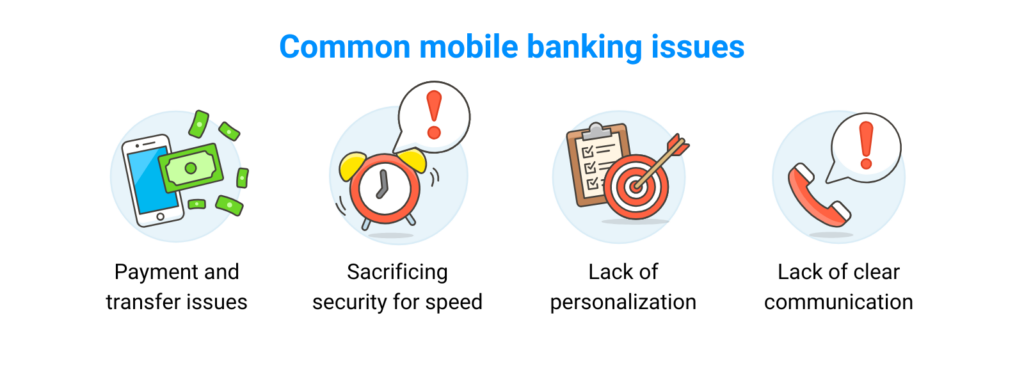
What are the most common mobile banking issues?
A good mobile banking experience is critical to improving customer retention and strengthening your brand’s reputation. Below, we go over a few of the most common mobile banking and finance app support issues, plus tips for resolving them.
Payment and transfer issues
A major mobile banking issue is confusion surrounding payments and transfers. Digital channels such as mobile banking and finance apps have become central to everyday banking in the U.S. Over half of U.S. banking customers say that they primarily use mobile apps to manage their accounts, so having clear information about transactions is critical.
When users don’t see a clear status for a transfer or payment, they often have to open support tickets to confirm whether a transaction is completed, is pending or requires additional steps.
This can be a frequent occurrence in banking app troubleshooting, where ambiguity around transaction status leads to high ticket volume and potentially increased customer rage. Clear labels such as “completed,” “pending” or “failed,” combined with simple guidance and direct links to help resources, can reduce friction and lower support volume.
Sacrificing security for speed
Fast resolution is critical for finance app support issues, but in mobile banking environments, prioritizing speed over security can introduce serious risk. Industry research shows that as mobile banking adoption increases, so do the risks of fraud, account takeovers and data vulnerabilities.
In highly regulated industries, this trade-off can erode customer trust and brand reputation while increasing regulatory and compliance risk.
Support leaders can potentially reduce security-related incidents by pairing strong protections, such as multifactor authentication (MFA), with up-to-date fraud-detection best practices. It's also beneficial to include clear, in-app explanations that help users understand why specific verification steps are required.
Additionally, educating customers on basic security habits, such as fully logging out of the app rather than simply closing it, or avoiding public Wi-Fi for banking activities, can also help protect them from malicious actors.
Lack of personalization
There are numerous advantages to providing personalized customer service in finance app support. 54% of U.S. customers want banks and other financial service providers to create more tailored interactions and experiences. By creating more customized in-app service interactions, you can meet customer expectations and differentiate your brand.
Additionally, personalization can benefit your company or institution’s bottom line. Research by McKinsey shows that businesses that personalize customer interactions can increase revenue by as much as 40%.
So, what does personalization look like for banking app troubleshooting? Here are a few examples of personalized in-app support in action:
- Offer multilingual customer support options so that customers can get help in their preferred language.
- Tips for improving credit scores.
- Suggesting relevant products based on a customer’s previous interactions or goals.
- Using conversational, easy-to-understand language to help guide customers through finance app support issues.
The bottom line? Financial institutions that want to stand out to customers need to balance personalized, curated experiences with data security best practices.
Lack of clear communication
Another common issue in finance app support is vague or inconsistent communication. Over half of customers report feeling frustrated when banks and financial institutions do not clearly explain what’s happening, what action is required or what to do next.
In banking app troubleshooting, unclear messaging can surface at inconvenient times, such as failed logins, delayed transactions or additional verification requests. When customers see generic notifications like "something went wrong" or "try again later," they're left guessing what they should do next. This uncertainty frequently leads to repeat support tickets and escalations that could've been avoided with clear communication.
Support leaders can reduce this friction by focusing on proactive customer service, such as in-app notifications about system status, known outages or common transaction delays, as well as short, clear explanations that tell customers what happened and what their next step should be. Setting expectations up front, for example, by explaining how long a specific process may take or why a payment is pending, can help mitigate frustration and potentially reduce support ticket volume.
Over time, clear, proactive communication can strengthen customer relationships. When customers feel informed rather than left in the dark, they're more likely to remain with their financial institution, leading to higher satisfaction and customer retention rates.
How to measure and improve finance app support performance
Reducing mobile banking issues is not only about fixing what customers see, but also tracking what happens after a support interaction. Support and operations teams often monitor a small set of key performance indicators (KPIs) to understand whether in-app guidance and support are actually working.
Common metrics include first-call resolution (FCR), churn and average handle time (AHT), which can help highlight where customers are still getting stuck in transaction flows, security steps or self-service paths. Reviewing this data alongside customer behavior can help teams identify gaps between what the app is telling customers and what it actually delivers.
Over time, this allows teams to refine in-app messaging, update help content and prioritize fixes that reduce friction at scale. By tying support outcomes back to specific app experiences, financial services institutions can make more informed decisions about where to invest in usability, security communication and personalization efforts.
Don’t let mobile banking issues get in the way of a good customer experience
The customer experience (CX) is important to the success of any business, but especially for banks and other financial institutions. Good customer experiences are critical for building trust with your customers.
Since finance institutions deal with very personal data and the customer’s money, trust is critical in maintaining a positive customer experience and improving brand loyalty. By getting ahead of some of the mobile banking issues outlined here, you can mitigate their impact on brand trust and potentially reduce the risk of customer attrition.
Looking to take your support solutions to the next level? Ozmo’s comprehensive support platform is trusted by Google, Verizon, Rogers and more. Discover the future of banking and finance app support today!